Showing posts with label creative. Show all posts

INDIAN ARTISTRY ( Famous Folk and Tribal Art of India)

Lucet Stellae


The rich cultural diversity of India is well reflected in the vivid, distinct and enchanting folk art and crafts. Various painting styles are prevalent across various regions, each representing tradition, customs, and ideologies passed on from one generation.  In due course of time, urbanization brought these painting forms on paper, canvas, and cloth etc. Indian painting styles are not just a reflection of the indigenous lifestyle but a perfect example of artistic expression through simple yet distinct compositions.Every region in India has its own style and pattern of art, which is known as folk art. Other than folk art, there is yet another form of traditional art practiced by several tribes or rural population, which is classified as tribal art. The folk and tribal arts of India are very ethnic and simple, and yet colorful and vibrant enough to speak volumes about the country's rich heritage.

Here are some of the popular Indian folk and tribal painting styles -

  • PATACHITRA


Patachitra or Pattchitra is a general term for traditional, cloth-based scroll painting, based in the eastern Indian states of Odisha and west Bengal. patachitra artform is known for its intricate details as well as mythological narratives and folktales inscribed in it.

  • MADHUBANI PAINTING


Madhubani painting was traditionally created by the women of various communities in the Mithila region of the Indian subcontinent. It originated from Madhubani district of the Mithila region of Bihar. Madhubani is also a major export center of these paintings.This painting is done with a variety of tools, including fingers, twigs, brushes, nib-pens, and matchsticks and using natural dyes and pigments. It is characterised by its eye-catching geometrical patterns.

  • KALAMEZHUTHU


Kalamezhuthu is unique form of this art found in Kerala. It is essentially a ritualistic art practiced in temples and sacred groves of Kerala where the representation of deities like Kali and Lord Ayyappa, are made on the floor.

  • MINATURE PAINTING

The tradition of miniature painting can be traced from the 9th-10th century in the Buddhist Pala period palm leaf manuscript of eastern India and in the western India in the Jaina palm leaf manuscript.

  • GOND PAINTING


Gond paintings are a form of painting from folk and tribal art that is practiced by one of the largest tribes in India with whom it shares its name. Gond comes from the Dravidian expression, Kond which means 'the green mountain'. ... It is said that Gond paintings resemble aboriginal art from Australia.

  • TANJORE ART


Religious paintings with a royal heritage is the best definition for Thanjavur paintings, now better known as Tanjore paintings. Tanjore painting ranks among the greatest traditional art forms for which India is noted worldwide. Thanjavur painting is a classical South Indian Painting style, which was inaugrated from the town of Thanjavur.

  • PHAD


Phad Painting is a style religious scroll painting and folk painting, practiced in Rajasthan state of IndiaThis style of painting is traditionally done on a long piece of cloth or canvas, known as phad. The narratives of the folk deities of Rajasthan, mostly of Pabuji and Devanaryan are depicted on the phads.

  • WARLI PAINTING


The Warli Painting tradition in Maharashtra are among the finest examples of the folk style of paintings. The Warli  tribe is one of the largest in India, located outside of Mumbai. Despite being close to one of the largest cities in India, the Warli reject much of contemporary culture. The style of Warli painting was not recognised until the 1970s, even though the tribal style of art is thought to date back as early as 10th century A.D.

~JINSHA M


RAJA RAVI VARMA

Lucet Stellae


 Raja Ravi Varma was an Indian painter and artist, considered as one of the greatest painters in the history of Indian art. Raja Ravi Varma is known for his amazing paintings, which revolve mainly around the Puranas (ancient mythological stories) and thegreat Indian epics - Mahabharata and Ramayana. Ravi Varma is one of the few painters who managed to accomplish a beautiful union of Indian traditionwith the techniques of European academic art.Varma was also responsible in taking the Indian art all over the world with his impeccable technique. What gave him the edge over other painters of his generation was that he fused Indian tradition with European technique thus coming up with a new genre of painting in India. He brought out on canvas several folk and traditional art forms of India.

His portrayal of Hindu gods and goddesses went on to become worship material for many people belonging to the lower castes. Back then, these people were often forbidden from entering temples and thus they celebrated Varma's works, for they gave them an idea of how the deities looked inside the temple. He also managed to improve the artistic knowledge and spread the importance of art among Indian people.

EARLY LIFE

Raja Ravi Varma was born to Umamba Thampuratti and Neelakanthan Bhattatiripad on April 29, 1848, in the princely state of Kilimanoor, in Kerala. While his mother was a poet and a writer by profession, his father was a scholar. He had three siblings, Goda Varma, Raja Varma and Mangala Bayi.

In 1866, at the age of 18, Varma was married to 12-year-old Bhageerthi Bayi (known formally as Pooruruttati Nal Bhageerathi Bayi Thampuratty) of the royal house of Mavelikkara, another major fief of Travancore kingdom.

Coming from a family of creative personnel comprising of scholars, poets and painters, it was only natural for young Varma to be blessed with artistic ingenuity.

The inborn talent of the painter started showing at a very tender age. Recognizing the innate aptitude of their child, his parents sent him to study under the patronage of Ayilyam Thirunal Maharaja of Travancore, when he was only 14 years old. He received tutelage, first from the palace painter Rama Swami Naidu, who taught him the nuances of water painting and then from Theodor Jenson, a Dutch painter, who gave him lessons on oil paintings.

GREAT PAINTINGS OF RAJA RAVI VARMA

Raja Ravi Varma produced many masterpieces of art during his life. Here is a comprehensive list of some of the most prominent works of Raja Ravi Varma:

  • SHAKUNTALA (1870)


  • DAMAYANTI (1895)

  • WOMEN HOLDING A FRUIT (1900)

  • STOLEN INTERVIEW  (1906)

  • YASHODA KRISHNA (1895)

  • TARA DEVI (1898)

  • ADI SHANKARACHARYA (1904)

  • NAIR LADY ADORNING HER HAIR (1873)

  • THERE COMES PAPA (1893)


AWARDS AND ACHIEVEMENT

  • At the beginning of his career, in 1873, he won an award in Vienna where his paintings were exhibited.
  • At the World’s Columbian Exposition in 1893, he was bestowed with three gold medals for his work of art.
  • In 1904, on behalf of the King Emperor, Viceroy Lord Curzon awarded him with the Kaisar-i-Hind Gold Medal.
  • Several schools, colleges, institutions and cultural organizations have been named after him, such as Raja Ravi Varma High School at Kilimanoor, a college dedicated to fine arts in Mavelikara, Kerala, and so on.
- JINSHA M
BODY PAINTING

Lucet Stellae


Body Painting is a form of body art where artwork is painted directly onto the human skin. Unlike tattoos and others form of body art, body painting is temporary, lasting for several hours or sometimes up to a few weeks (in the case of mehndi or henna tattoos).


HISTORY


 Body painting is a form of art that followed us from the ancient prehistoric times when human race was born, to the modern times where artist use human body as a innovative canvas that showcase human beauty like no art style before it. Many believe that body painting was the first form of art that was used by humans. Records of various ancient and modern tribes from Africa, Europe, Asia and Australia show clear records of their body painting heritage. They use natural pigments from plants and fruits, ancient people decorated themselves  with ritual paintings, tattoos etc. According to many historians, body painting was the important part of their daily lives. Body paint was often applied for wedding, preparation for war, death and funeral .In addition to temporary body paints, many cultures used face paint or permanent tattooing that could showcase much larger details than paintings made from natural pigments.


FACE PAINTING


All those ancient traditions slowly traveled with rise of the modern human civilization, managing to remain a part of traditions even modern times. Some example of modern day body paintings can be found in India, and African-American Indian tribes that use body paint for many of their religious ceremonies.

First modern appearance of the full body paint emerged in 1933 when famous cosmetic inventor Max Factor Sr. caused  confusion and disturbance with their exhibition of naked model Sally Rand on 1933 world’s Fair in Chicago.

Widespread use of body painting emerged during 1960s when western artists strived to find new way to express themselves in a form that will be sensational and shocking. Their moment came with the forming of the hippie movement in United States, which accepted sexuality, psychodelia and nudity as their way of life.

 It’s important to note that body painting is not always applied to fully nude female body. It can also be applied to the smaller piece of skin, of then back, hands, chest, and face.


There are many popular artists that used body paint as the means to express their artistic vision are:

  • Jana Sterbak
  • Rebecca Horn
  • Youri Messen- Jaschin
  • Joanne Gair

Currently artistic body paint is a accepted form of alternative art across entire world.

- JINSHA M

STREET ART

Lucet Stellae

Street art
is an art, specifically visual art,developed in public spaces that is, *in the streets * though the term usually refers to unsanctioned art,as opposed to government sponsored initiatives. The term can include traditional graffiti artwork, stencil graffiti, sticker art, street poster art, sideways  chalk art, art intervention, guerilla art, spray paint murals and street installations. Typically, the term street art or the more specific post graffiti is used to distinguish contemporary public-space artwork from territorial graffiti, vandalism and corporate art. The work has moved from the beginnings of a graffiti and vandalism to new modes where artist works to bring messages, or just beauty to an audience.


HISTORY

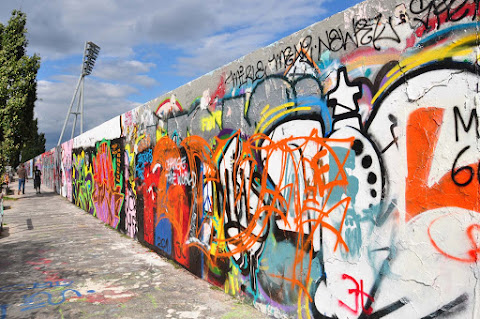
Berlin Wall
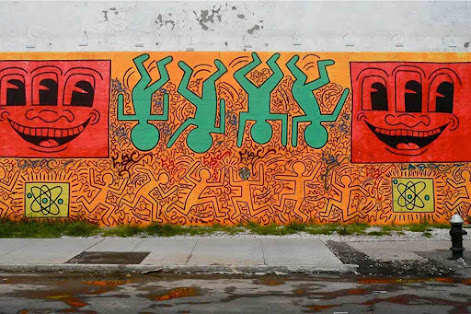
Some of the earliest expressions of street art were the graffiti, which started showing up on the sides of train cars and walls, and it was the work of gangs in the 1920s and 1930s in New York. Truly impact of this subversive culture was extraordinary felt in the 1970s and 1980s. The history of street art originated with tagging, or scratching names on public property. Graffiti artists in the 1970s and 1980s began to inspire people like Keith Haring, who did chalk drawings in the New York City subway system before rising to prominence in the art world. These decades were a turning point in the history of street art; it was the time when young people, by responding to their social and political environmental started to create a movement.

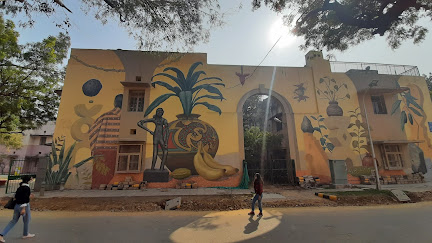
Lodhi Art District

Types of Street Art

Street artists are known to fill life in the streets with their creativity and imagination. Street arts can be found all around the world. While known artists make some of them, others are made by unknown talented artists who like to give out their art without expecting anything. Street art is often termed as a wall painting or spray paint art, but many different types of street art are present around the world. Here are the top seven types of street art that you will often come across the urban streets.

Graffiti

Graffiti Berlin Wall
Graffiti is writing or drawings made on a wall or other surface, usually without permission and within public view. In modern times, spray paint and marker pen have become commonly used graffiti materials, and there are many different types and styles of graffiti; it is a rapidly developing art form.  It has a history which goes back to the ancient Egyptian and Greek period. Graffiti can be used to give out a message or just to make a plain wall look more attractive.


Stencil Graffiti

Stencil Graffiti
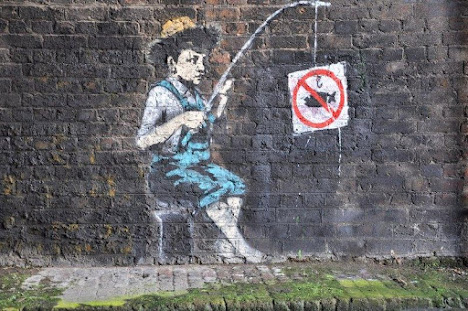
Stencil graffiti is a form of graffiti that makes use of stencil made out of paper, cardboard, or other media to create an image or text that is easily reproducible. The desired design is cut out of the selected medium and then the image is transferred to a surface through the use of spray paint or roll-on paint. The process of stencilling involves applying paint across a stencil to form an image on a surface below. Sometimes multiple layers of stencils are used on the same image to add colours or create the illusion of depth. Because the stencil stays uniform throughout its use, it is easier for an artist to quickly replicate what could be a complicated piece at a very quick rate, when compared to other conventional tagging methods.

Sticker Street Art

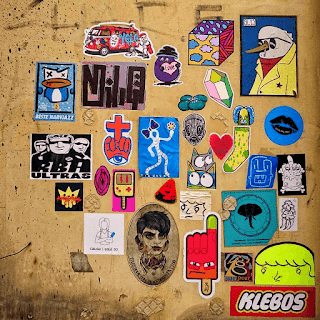
Sticker Street Art 
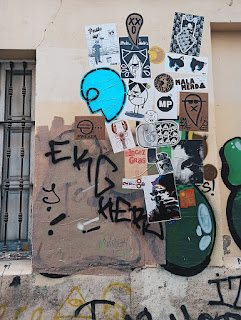
From the childhood hobby of sticking stickers to our hands and books, some of the artists have taken this concept to streets. Sticker is a form of street art in which an image or message is publicly displayed using stickers. These stickers may promote a political agenda, comment on a policy or issue, or comprise a subcategory of graffiti.They make eye-catching stickers of different sizes and post them out on the streets to the trees, lampposts, walls and benches. While some stickers can be removed easily, others are meant to stay for a long time.

Street Poster Art

Street poster Art
Street poster art is a kind of graffiti, more specifically categorized as "street art". Posters are usually handmade or printed graphics on thin paper. It can be understood as an art piece that is installed on the streets as opposed to in a gallery or museum, but by some it is not comprehended as a form of contemporary art.


Guerilla Art

Guerilla Art
Guerrilla art is a street art movement that first emerged in the UK, but has since spread across the world and is now established in most countries that already had developed graffiti scenes. In fact, it owes so much to the early graffiti movement, in the United States guerrilla art is still referred to as ‘post-graffiti art’. The production of guerilla  art is focused on cause and effect, not the material piece itself. It aims to produce an effect within the minds of those people who live within the environment being altered. It does not necessarily aim to produce meaningful art in itself.


Street Installation

Street Installation
Street installations are a form of street art and installation art. While conventional street art is done on walls and surfaces street installations use three-dimensional objects set in an urban environment.


Sideways Chalk Art

Sidewalk Chalk Art
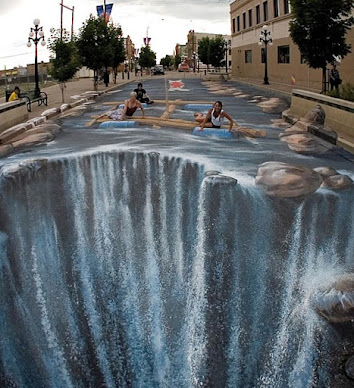
Sidewalk chalk is typically large and thick sticks of chalk rather than Calcium Carbonate that come in multiple colors and are mostly used for drawing on pavement or concrete sidewalks. Many artists are talented enough to create realistic images on the sidewalks. You may see a real man standing across the street, but as you move closer, you will find that it is only an elongated piece of art drawn on the sidewalk.


Spray Paint Murals


Spray Paint Murals
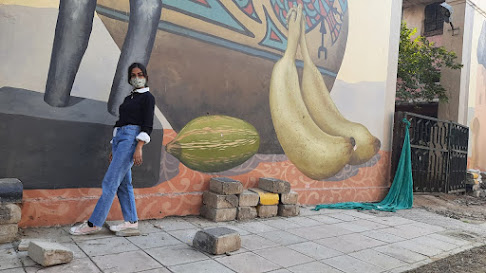
Many artists like to draw paintings directly on the walls using spray paints. These are called murals and are usually the representation of the abstract ideas of the artists. It makes the walls look cooler, and some of the paintings may even look realistic.


List of notable street artists in Asia

INDIA

  •  Daku, pseudonymous - graffiti, social commentary
  •  Yantr, pseudonymous -  machines, social commentary

AFGHANISTAN

  •   Shamsia Hassani – street art, digital art

HONG KONG

  •  Tsang Tsou Choi – graffiti

IRAN

  •   A1one – graffiti, street art
  •   Black Hand – stencil artist
  •   Reza Rioter – graffiti

KOREA

  •  Royal Dog – graffiti writing, spray murals

PAKISTAN

  •  Sanki King – graffiti, street art, sneaker art

ISRAEL

  • Solomon Souza – spray paint art
  •  Know Hope – social practice artist

THAILAND

  •  Headache Stencil


Famous street artist

  •  Cornbread
  •   Daze
  •   Dondi White
  •   Tracy 168
  •   Lady Pink
  •   Jean-Michel Basquiat (SAMO)
  •   Keith Haring
  •   Shepard Fairey


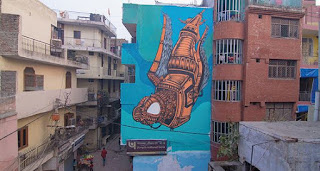
SOME BEAUTIFUL STREET ART IN DELHI

Delhi is a city that is known for its art and culture. This art form is Graffiti which is spread across the mundane walls of the city and consists of drawings and paintings by world famous artists. Here is a list of the top street-art pieces that should not be missed by any art lover in Delhi.

KHAN MARKET

Khan Market Street Art
Everybody in Delhi is well aware of the Khan market. But how many of you have seen the other side of this market? The side which is painted with some super gorge street art which will make you keep staring.


HAUZ KHAS

Hauz Khas Graffiti
True to the super cultural and artsy vibe of the place, the street and wall art here is equally surreal. If you haven’t seen it in real, we’re sure you’d have spotted it in the movie Tamasha for sure.


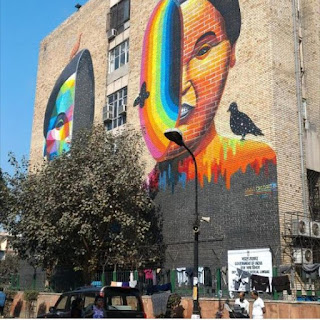
LODHI ART DISTRICT


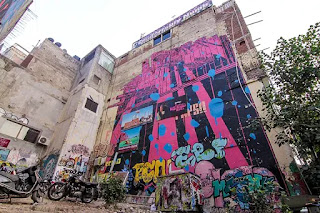
Lodhi Art District
India's first art district, with murals by 50 Indian and International artists. Lodhi Art District, From the collection of: Street art India. Lodhi Colony was the last housing estate build by the British, which bears a rich history in Delhi's timeline for its iconic architecture.


SHAHPUR JAT

Shahpur Jat 
A burst of colours, a dash of creativity and freedom of expression – Delhi’s tiny urban village, Shahpur Jat, signifies all this and much more.

Top 10 cities for Street Art in the world

  • New York
  • Berlin
  • Mexico City 
  • Lisbon
  • Paris 
  • Sao Paulo
  • Bristol
  • Buenos Aires

Delhi Street Art on wall

- JINSHA M


WARLI ART

Lucet Stellae


The Warli or Varli are an indigenous tribe( Adivasi ) of Western India; living in mountainous as well as coastal areas along the Maharashtra-Gujarat border. Maharashtra is known for its Warli art. It is also famous for their painting styles and this art is a form of tribal art mostly created by tribal people from the North Sahyadri Range in Maharashtra. It is the vivid expression of daily and social events of the Warli tribe of Maharashtra used by them to embellish the walls of villages houses. The traditions Warli painting in Maharashtra are among the finest examples of the folk style of paintings. The style of Warli painting was not recognized until the 1970s, even though the tribal style of art is thought to date back as early as 10th century AD.

Jiva Soma Mashe, the artist in Thane district has played a great role in making Warli paintings more popular. In 1970s the Warli painting, which was a predominantly ritual art till that time, took a radical turn, when Jiva Mashe started to paint not for any special ritual but on an everyday basis. Since the 1970s Warli painting has moved onto paper and canvas. Warli paintings on paper have become very popular and are now sold all over India. Today , small paintings are done on cloth and paper but they look best on the walls or in the form of huge murals that brings out the vast and magical world of the Warlis.

Women are mainly engaged in the creation of these paintings. Images of human beings and animals, along with scenes from daily life are created in a loose rhythmic pattern. Painted white on mud walls, they are pretty close to pre-historic cave paintings in execution and usually depicts scenes of human figures engaged in activities like dancing, sowing, performing puja, hunting, harvesting etc. In Warli art it is rare to see a straight line. A series of dots and dashes make one lines.  Later, many artist started to draw straight lines in their paintings.

Warli festival


Geometric shapes in Warli Art

These rudimentary wall paintings use a set of basic geometric shapes: a circle, a triangle, and a square. These shapes are symbolic of different elements of nature.

The circle and the triangle come from their observation of nature. The circle represents the sun and the moon, while the triangle is derived from mountains and pointed trees. In contrast, the square appears to be a human invention, indicating a sacred enclosure or a piece of land.


The central motif in each ritual painting is the square, known as the “chalk” or “Shaukat”, mostly of two types known as Devchauk and Lagnachauk. Inside a Devchauk is usually a depiction of Palaghata, the mother goddess, symbolizing fertility.

Material used for Warli Art  

The walls are made of a mixture of branches, earth and red brick that make a red ochre background for the paintings. The Warli only paint with a white pigment made for mixture of rice flour and water, with gum as binder. A bamboo stick is chewed at the end to give it the texture of a paintbrush. Wall are painted only to mark special occasion such as wedding, festivals, or harvests.

Innovation

The increase demand for Warli painting in urban centres has led to the art form evolving newer, more diverse styles and varieties. A recent innovation adapted by Warli artists is the depiction of modern, urban motifs like bicycles auto-rickshaws and roads. The basics symbols remain the same but the use of modern items creates a very contemporary vibe which appeals to a wider audience.


Facts about Warli Art


  • Traditionally this art was exclusively done by women but with commercialization and greater demand, it has become the domain of male artist.

  • The cultural intellectual property right of Warli Painting is held by the Warli tribal. Community which has also set up a not-for-profit organization called the Warli Art Foundation devoted to promoting this art form.

  • Warli painting are generally not used on any kind of footwear as this is an auspicious art form for the tribes.

  • Tarpa dance is one of the central aspect of every Warli paintings. In this both men and women entwine in their hands and move in circle around the Tarpa players.

 
-  JINSHA M