Showing posts with label Entertainment. Show all posts

Hero Xpulse 200

Lucet Stellae


 The XPulse's history begins with the creation of the Hero Impulse. India's first adventure bike in the 150cc category was the Impulse. The bike has received a lot of praise from customers since its inception because of its impressive body, but the Impulse failed due to the bike's poor strength and lack of adequate marketing.


Hero debuted the motorcycle for the first time at the 2017 EICMA Show in Italy. The XPulse 200 continues the legacy of the Impulse, but it is more approachable and purposeful. The motorcycle has been upgraded to meet the most recent, strict emission standards.

Hero Xpulse 200 is a bike available at a starting price of Rs. 1,15,228 in India. It is available in only 1 variant and 5 Colours. The XPulse's 200 is powered by 199.6cc BS6 engine which develops a power of 17.8 bhp and a torque of 16.45 Nm. With both front and rear disc brakes, Hero Xpulse 200 comes up with anti-locking braking system. This Xpulse 200 bike weighs 157 kg and has a fuel tank capacity of 13 liters.


The XPulse 200 is outfitted with spoke wheels, a high-rise front mudguard, fork gaiters, a bash plate, dual-purpose tyres, and an upswept exhaust. The motorcycle has 21-inch front wheels and 18-inch rear wheels. Suspension functions are handled by telescopic units with 190mm of travel on the front and a 10-step flexible monoshock with 170mm of travel on the back.

Specifications

Power & PerformancePower & Performance

Fuel TypePetrol

Max Power17.8 bhp @ 8,500 rpm

Max Torque16.45 Nm @ 6,500 rpm

Cooling SystemOil Cooled

Transmission5 Speed Manual

Transmission TypeChain Drive


Emission StandardBS-VI

Displacement199.6 cc

Cylinders1

Bore66.5 mm

Stroke57.5 mm

Valves Per Cylinder2

Compression Ratio10:01

IgnitionDigital DC CDI Ignition System

Spark Plugs1 Per Cylinder

ClutchMulti Plate Wet Clutch

Fuel Delivery SystemFuel Injection

Fuel Tank Capacity13 litres

Riding Range 520 Km

Mileage - Owner Reported 40 kmpl


Brakes, Wheels & SuspensionBrakes, Wheels & Suspension

Braking System Single Channel ABS

Front Brake TypeDisc

Front Brake Size276 mm

Front Tyre Size90/90-21

Rear Tyre Size120/80-18

Tyre TypeTubed

Rear Brake TypeDisc

Rear Brake Size220 mm

Calliper Type--

Front Wheel Size21 inch

Rear Wheel Size18 inch 

Radial TyresNo

Wheel TypeSpoke 

Front SuspensionTelescopic (37 mm Dia) with Double DU Bush (190 mm Stroke) 

Rear Suspension10 step Rider-adjustable    Monoshock      


The motorcycle has an 823mm seat height and a 220mm ground clearance. The XPulse 200 has disc brakes on both ends and a single-channel ABS system for braking. The motorcycle features a full-LED headlamp and a wireless instrument cluster with Bluetooth communication for navigation and call warnings. It has a fuel tank capacity of 14 litres.
The XPulse 200 BS6 is powered by a 199.6cc single-cylinder engine that is now oil-cooled rather than air-cooled as the BS4 model. The revised motor generates 17.8bhp at 8,500rpm and 16.45Nm torque at 6,500rpm. The engine is mated to a five-speed transmission.
Hero sells the XPulse 200 BS6 in a single fuel-injection version. The carburettor variant is no longer available. The motorcycle is available in five different colours: White, Matte Green, Matte Grey, Sports Red, and Panther Black.


stay tuned for more and if you like this blog please give it a thumbs up don’t forget to comment your favorite bike and also give us your valuable suggestion through the comment so that we can make quality content for you.😀

- JERIN VARGHESE


INDIAN ARTISTRY ( Famous Folk and Tribal Art of India)

Lucet Stellae


The rich cultural diversity of India is well reflected in the vivid, distinct and enchanting folk art and crafts. Various painting styles are prevalent across various regions, each representing tradition, customs, and ideologies passed on from one generation.  In due course of time, urbanization brought these painting forms on paper, canvas, and cloth etc. Indian painting styles are not just a reflection of the indigenous lifestyle but a perfect example of artistic expression through simple yet distinct compositions.Every region in India has its own style and pattern of art, which is known as folk art. Other than folk art, there is yet another form of traditional art practiced by several tribes or rural population, which is classified as tribal art. The folk and tribal arts of India are very ethnic and simple, and yet colorful and vibrant enough to speak volumes about the country's rich heritage.

Here are some of the popular Indian folk and tribal painting styles -

  • PATACHITRA


Patachitra or Pattchitra is a general term for traditional, cloth-based scroll painting, based in the eastern Indian states of Odisha and west Bengal. patachitra artform is known for its intricate details as well as mythological narratives and folktales inscribed in it.

  • MADHUBANI PAINTING


Madhubani painting was traditionally created by the women of various communities in the Mithila region of the Indian subcontinent. It originated from Madhubani district of the Mithila region of Bihar. Madhubani is also a major export center of these paintings.This painting is done with a variety of tools, including fingers, twigs, brushes, nib-pens, and matchsticks and using natural dyes and pigments. It is characterised by its eye-catching geometrical patterns.

  • KALAMEZHUTHU


Kalamezhuthu is unique form of this art found in Kerala. It is essentially a ritualistic art practiced in temples and sacred groves of Kerala where the representation of deities like Kali and Lord Ayyappa, are made on the floor.

  • MINATURE PAINTING

The tradition of miniature painting can be traced from the 9th-10th century in the Buddhist Pala period palm leaf manuscript of eastern India and in the western India in the Jaina palm leaf manuscript.

  • GOND PAINTING


Gond paintings are a form of painting from folk and tribal art that is practiced by one of the largest tribes in India with whom it shares its name. Gond comes from the Dravidian expression, Kond which means 'the green mountain'. ... It is said that Gond paintings resemble aboriginal art from Australia.

  • TANJORE ART


Religious paintings with a royal heritage is the best definition for Thanjavur paintings, now better known as Tanjore paintings. Tanjore painting ranks among the greatest traditional art forms for which India is noted worldwide. Thanjavur painting is a classical South Indian Painting style, which was inaugrated from the town of Thanjavur.

  • PHAD


Phad Painting is a style religious scroll painting and folk painting, practiced in Rajasthan state of IndiaThis style of painting is traditionally done on a long piece of cloth or canvas, known as phad. The narratives of the folk deities of Rajasthan, mostly of Pabuji and Devanaryan are depicted on the phads.

  • WARLI PAINTING


The Warli Painting tradition in Maharashtra are among the finest examples of the folk style of paintings. The Warli  tribe is one of the largest in India, located outside of Mumbai. Despite being close to one of the largest cities in India, the Warli reject much of contemporary culture. The style of Warli painting was not recognised until the 1970s, even though the tribal style of art is thought to date back as early as 10th century A.D.

~JINSHA M


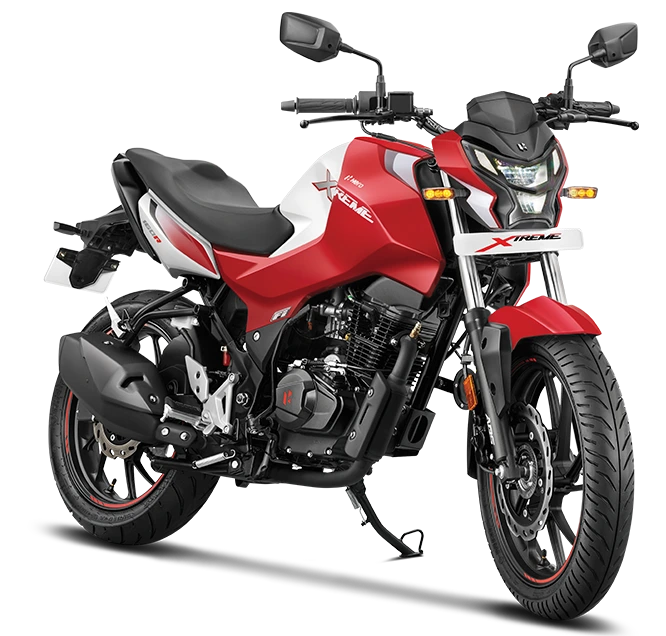
Hero Xtreme 160R "URBAN RACE"

Lucet Stellae


Hero Xtreme 160R is a shuttle bike available at a starting price of Rs. 1,05,733 in India. It is available in 2 variants and 3 colours with a top price variant starting from Rs. 1,08,740.The Xtreme 160R is Hero's newest entrant in India's 150-160cc sporty commuter market. The motorcycle is a substitute for the now-discontinued Xtreme Sports, which has struggled to win over many of the country's customers during its lifetime.

Xtreme 160R key highlights

Displacement163 cc
Mileage 48 kmpl
Kerb Weight138.5 kg
Colours
  • Pearl Silver White
  • Sports Red
  • Vibrant Blue

The Xtreme 160R is Hero's newest entrant in India's 150-160cc sporty commuter market. The motorcycle is a substitute for the now-discontinued Xtreme Sports, which has struggled to win over many of the country's customers during its lifetime. The Xtreme 160R is powered by 163cc BS6 engine which develops a power of 15 bhp and a torque of 14 Nm. With front disc and rear drum brakes, Hero Xtreme 160R comes up with anti-locking braking system. This Xtreme 160R bike weighs 138.5 kg and has a fuel tank capacity of 12 liters.


Engine and Transmission

Engine TypeAir cooled, 4 Stroke 2 Valve Single cylinder OHC
Displacement163 cc
Max Power15.3 PS @ 8500 rpm
Max Torque14 Nm @ 6500 rpm
No. of Cylinders1
Cooling SystemAir Cooled
Valve Per Cylinder2
Drive TypeChain Drive
StartingKick and Self Start
Fuel SupplyFuel Injection
ClutchMulti Plate Wet Clutch
TransmissionManual
Gear Box5 Speed
Emission Typebs6

Chassis and Suspension

ChassisTubular Diamond
Body TypeSports Naked Bikes
Front SuspensionTelescopic with anti friction bush
Rear Suspension7 step Rider-adjustable Monoshock

Tyres and Brakes

Tyre SizeFront :-100/80-17 Rear :- 130/70 -17
Tyre TypeTubeless
Wheel SizeFront :-431.8 mm,Rear :-431.8 mm
Wheels TypeAlloy
Front BrakeDisc
Rear BrakeDisc
Front Brake Diameter276 mm
Rear Brake Diameter220 mm
Radial TyreYes
An all-new 163cc single-cylinder air-cooled fuel-injected engine powers the Hero Xtreme 160R. It produces 15.2PS at 8500 rpm and 14Nm at 6500 rpm and works in tandem with a 5-speed transmission. The Bajaj Pulsar NS160, the most powerful bike in the segment, produces 17.2PS and 14.6Nm. The Xtreme 160R, according to Hero MotoCorp, can accelerate from 0 to 60 kilometres per hour in 4.7 seconds. 
A tubular diamond frame attaches the Hero Xtreme 160R to a 37mm telescopic front fork and a 7-step preload adjustable rear monoshock. The 100-section front (tubeless) and 130-section rear (radial tubeless) rubber was mounted to the 17-inch alloy wheels. The bike has a 276mm front petal disc for braking, and a 220mm petal disc or a 130mm drum for braking, depending on the variant.
As far as safety features are concerned, the streetfighter comes equipped with single-channel ABS as standard across the range. Other features include full-LED lighting, a hazard light switch, a side-stand-engine-cut-off function, and fully-digital instrumentation unit.

stay tuned for more and if you like this blog please give it a thumbs up don’t forget to comment your favorite bike and also give us your valuable suggestion through the comment so that we can make quality content for you.😀

- JERIN VARGHESE


Gol Gumbaz

Lucet Stellae

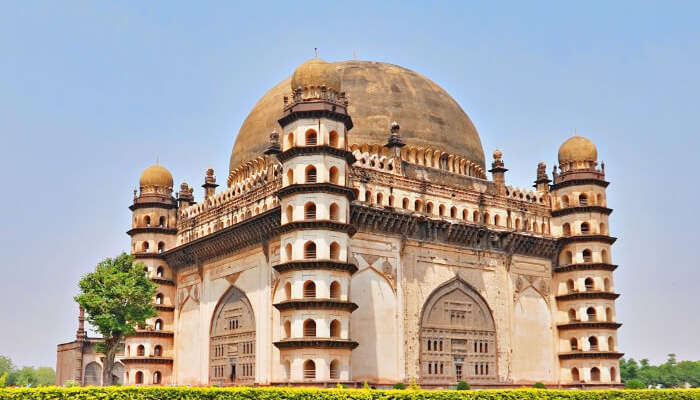
Gol Gumbaz is an imposing mausoleum that displays the architectural brilliance of the bygone eras. Located in Bijapur aka Vijayapura, a small town in Northern Karnataka, this splendid structure has one of the biggest domes in the world. With a history of more than 350 years, it stands as one of the most famous mausoleums in India. 


If you are planning a trip to Karnataka, make sure to keep aside some time to explore this grand structure.


Looking for more details about this architectural wonder? This blog has everything you should know about Gol Gumbaz, including its history, architecture, timings, entry fee, and other interesting facts. 

                                      HISTORY


This grand mausoleum is the final resting place of Mohammed Adil Shah, who was the ruler of Bijapur during the 17th century. The construction of the structure dates back to 1626 when the Sultan had just ascended the throne. It was his idea to build an impressive mausoleum for himself. Ironically, the structure was completed in 1656 after he breathed his last.

The name Gol Gumbaz has been derived from the words Gol Gumbadh or Gol Gummata, which means a dome in the circular shape. Since the most prominent feature of the structure is its giant circular dome, it came to be known as such. Apart from the Sultan’s mortal remains, the mausoleum houses the crypts of his two wives namely Taj Jahan Begum, Aroos Bibi, grandson, daughter, and his mistress Rambha.

            GOL GUMBAZ INFORMATION 


LocationBijapur or Vijayapura
Timings10:00 am to 5:00 pm; closed on Fridays
Entry Fee₹ 25 for Indians and SAARC citizens; ₹ 300 for foreigners
Timings of the Museum10:00 am to 5:00 pm; closed on Fridays
Museum Entry Fee₹ 5 per head
Camera₹ 25
Date of Establishment1626 to 1656
Commissioned byMohammed Adil Shah
Architectural StyleDeccan Indo-Islamic
ArchitectYaqut of Dabul
StatusMonument maintained by the Archeological Survey of India
Material UsedDark grey basalt
Distance from Major CitiesBangalore (525 km); Mysore (610 km); Goa (310 km); Pune (350 km); Mumbai (420 km); Hyderabad (380 km)
                                     
           ARCHITECTURE


Gol Gumbaz counts among the finest examples of Deccan Indo-Islamic architectural style. The colossal structure is made out of dark grey basalt. It reaches up to 51 meters in height while the giant dome has an external diameter of 44 meters, making it one of the largest domes ever built. Four dome-capped towers adorn the edifice on four sides. Each of these towers is seven stories high and has a staircase built inside it. A square podium with an intricately carved wooden canopy exists inside the main mausoleum hall.  The cenotaph slab in the middle of the podium marks the location of the actual tomb of the Sultan, in the ground below.

The mausoleum hall boasts of an area 18000 sq. ft., which marks it as one of the world’s largest single-chamber spaces. An interesting feature of Gol Gumbaz is that a whispering gallery runs around the dome’s inner periphery. Any sound made here gets echoed at least seven times or more. When you are inside the whispering gallery, you can hear even the softest of sounds from the other side of the monument. This phenomenon is attributed to the impressive acoustics of the structure.

Another impressive aspect of this structure is that there are no towers or pillars that provide support to the huge dome, which is an architectural marvel in itself. The dome, on the other hand, is held by eight intersecting arches from the inside.

                             LESSER KNOWN FACTS


  • It is believed that the dome of Gol Gumbaz is the second largest in the whole world, the largest one being the dome of St. Peter’s Basilica in Rome.
  • Mohammed Adil Shah built this huge structure during his reign because he wanted his tomb to be better than the tomb of his father, Ibrahim Rauza.
  • This monument is sometimes referred to as the Taj Mahal of South India.
  • When you enter the structure, you can see a stone hanging over its main entrance. Also called ‘bijli pathar’, it is in fact a piece of meteorite that fell onto the earth during the Sultan’s reign. It is believed that this stone protects the mausoleum from lightning.
Today, Gol Gumbaz stands as one of the most significant heritage monuments in India maintained by the Archeological Survey of India. It attracts a steady stream of visitors from far and near due to its spellbinding architecture and unique acoustic features. There is a museum situated near the structure that showcases an interesting collection of paintings, Chinese parchments, carpets, and other artifacts.

                                 TRAVELLER TIPS


The massive Gol Gumbaz tomb easily competes with India’s more famous mausoleum. Here are a few tips you should keep in mind if you plan on visiting the monument:

  • Reach the tomb early in the morning at the time of opening when there is not much crowd. This will give you more time and space to admire the beauty and architecture of this legendary memorial.
  • Do carry your camera because photography is allowed inside the monument.
  • You don’t need to worry about your personal vehicles as parking is available.
  • Keep good 1 to 2 hours of your time free while visiting the tomb so that you are able to enjoy every site of the place.
-NANDINI SAJEEV